
Permit-to-Work in Manufacturing Facilities: What the Regulations Require for High-Risk Work
In This Article
Permit-to-Work (PTW) is often the last formal authorisation before high-risk work begins. In manufacturing facilities, activities such as hot work, confined space entry, working at height, and equipment maintenance frequently take place alongside live production, making effective permit control essential for preventing serious incidents.
For Environment, Health and Safety (EHS) managers, PTW is a recognised control measure for managing high-risk work and, in many jurisdictions, a regulatory requirement for specific activities. It is also commonly reviewed during inspections, audits, and incident investigations.
Across Asia-Pacific (APAC), PTW systems follow the same basic principle: high-risk work should only begin after hazards have been assessed, controls verified, and work formally authorised. While these expectations are broadly consistent, the legal requirements and supporting guidance differ between jurisdictions. Understanding those differences helps manufacturers maintain compliant operations across the region.
Why PTW matters in manufacturing
Unlike construction projects, manufacturing facilities rarely shut down completely. Maintenance work, equipment upgrades, contractor activities, and production often continue side by side, creating risks that routine operating procedures are not designed to manage.
According to the International Labour Organization (ILO), an estimated 2.93 million workers die each year from work-related accidents and diseases worldwide. Many of the most serious incidents occur during high-risk, non-routine work where hazards have not been adequately identified or controlled before work begins. A PTW system provides the structured process needed to verify that appropriate controls are in place before these activities commence.
Typical high-risk situations include:
- Maintenance on energised equipment
- Hot work near combustible dust or flammable chemicals
- Confined space entry into tanks, vessels, reactors, pits, and silos
- Working at height around operating production lines
- Simultaneous operations involving employees and contractors
- Isolation of electrical, hydraulic, pneumatic, steam, or chemical energy sources
Without an effective PTW process, these activities can introduce hazards that normal operating procedures were never designed to control.
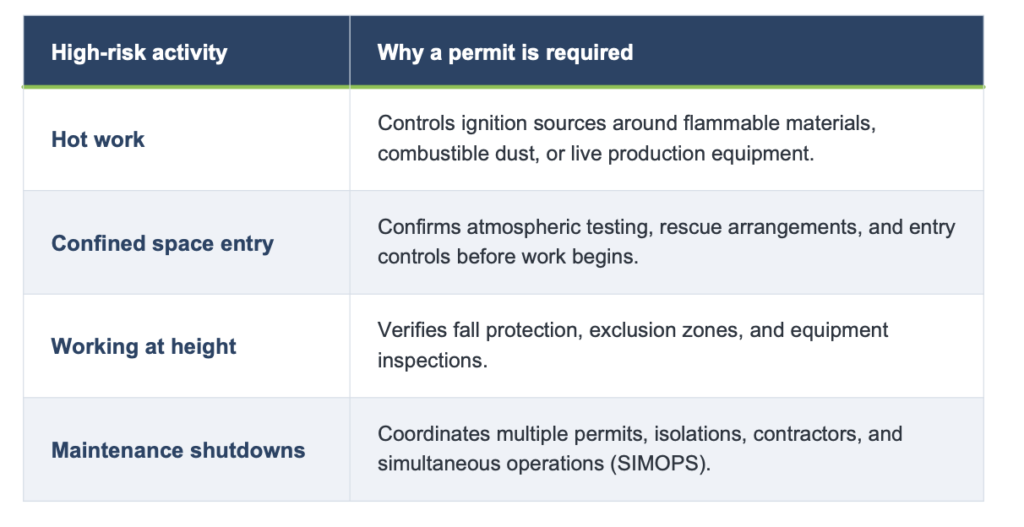
High-risk works that need permits
The following activities commonly require formal permit-to-work controls because they involve hazards that cannot be managed through routine operating procedures alone.
What regulations require for permit-to-work systems
Across APAC, regulators generally expect PTW systems to show that hazards have been identified, controls verified, and work formally authorised before it starts.
For manufacturing facilities, this typically includes:
- A documented risk assessment for the planned work
- Clearly defined scope, location, and validity period of the permit
- Verification that required energy isolations have been completed
- Atmospheric testing where required, such as for confined space entry or certain hot work activities
- Identification of required control measures, including fire protection, ventilation, fall protection, or exclusion zones
- Confirmation that competent personnel have authorised the work
- Communication of permit conditions to everyone involved
- Review or revalidation if the work scope changes, conditions change, or the permit expires
While these expectations are broadly consistent, the legal framework, competency requirements, documentation, and record retention obligations differ between jurisdictions.
How APAC jurisdictions apply these requirements
The principles behind permit-to-work systems remain largely consistent across APAC, but each jurisdiction incorporates them into its own occupational safety legislation and supporting regulations.
For example, Singapore regulates confined space work through the Workplace Safety and Health framework, while Malaysia establishes similar employer duties under the Occupational Safety and Health Act, supported by regulations and DOSH Codes of Practice. Other APAC jurisdictions apply comparable principles through their own occupational safety legislation and sector-specific requirements.
For manufacturers operating across multiple countries, the practical questions remain the same:
- What activities require a permit?
- What controls must be verified before work starts?
- Who is authorised to issue the permit?
- What records should be retained to demonstrate compliance?
Understanding these jurisdictional differences is essential for maintaining a consistent permit-to-work system across regional operations.
Common PTW findings during manufacturing audits
The same issues appear repeatedly during regulatory inspections, ISO audits, and incident investigations:
- Treating permits as administrative paperwork rather than a genuine hazard control
- One permit covering multiple unrelated jobs or an expanded scope of work
- Contractors using their own permit systems without site approval
- Energy isolations not physically verified before work begins
- Permits remaining open after work has been completed or personnel have changed
- Risk assessments not updated when the work scope changes
- Poor coordination between maintenance teams and production personnel regarding equipment status
Addressing these weaknesses strengthens both regulatory compliance and operational safety while improving the effectiveness of the PTW system.
Stay aligned with current requirements
Most manufacturing organisations already have permit-to-work procedures. The greater challenge is ensuring those procedures continue to reflect changing legal requirements as regulations evolve across different jurisdictions.
For organisations operating across APAC, maintaining a consistent PTW process means understanding not only internal procedures but also the specific legal obligations that apply in each country where work is carried out.
SimplyEHS provides expert-curated Manufacturing EHS Legal Registers covering Singapore, Malaysia, and other APAC jurisdictions. Developed and reviewed quarterly by ESC’s regulatory specialists, the registers help manufacturers identify permit-related legal obligations, stay informed of regulatory changes, and support ongoing compliance across regional operations.